
Defending Cities from Militarization
Analysis of Newton’s Executive Order on Federal Immigration Enforcement
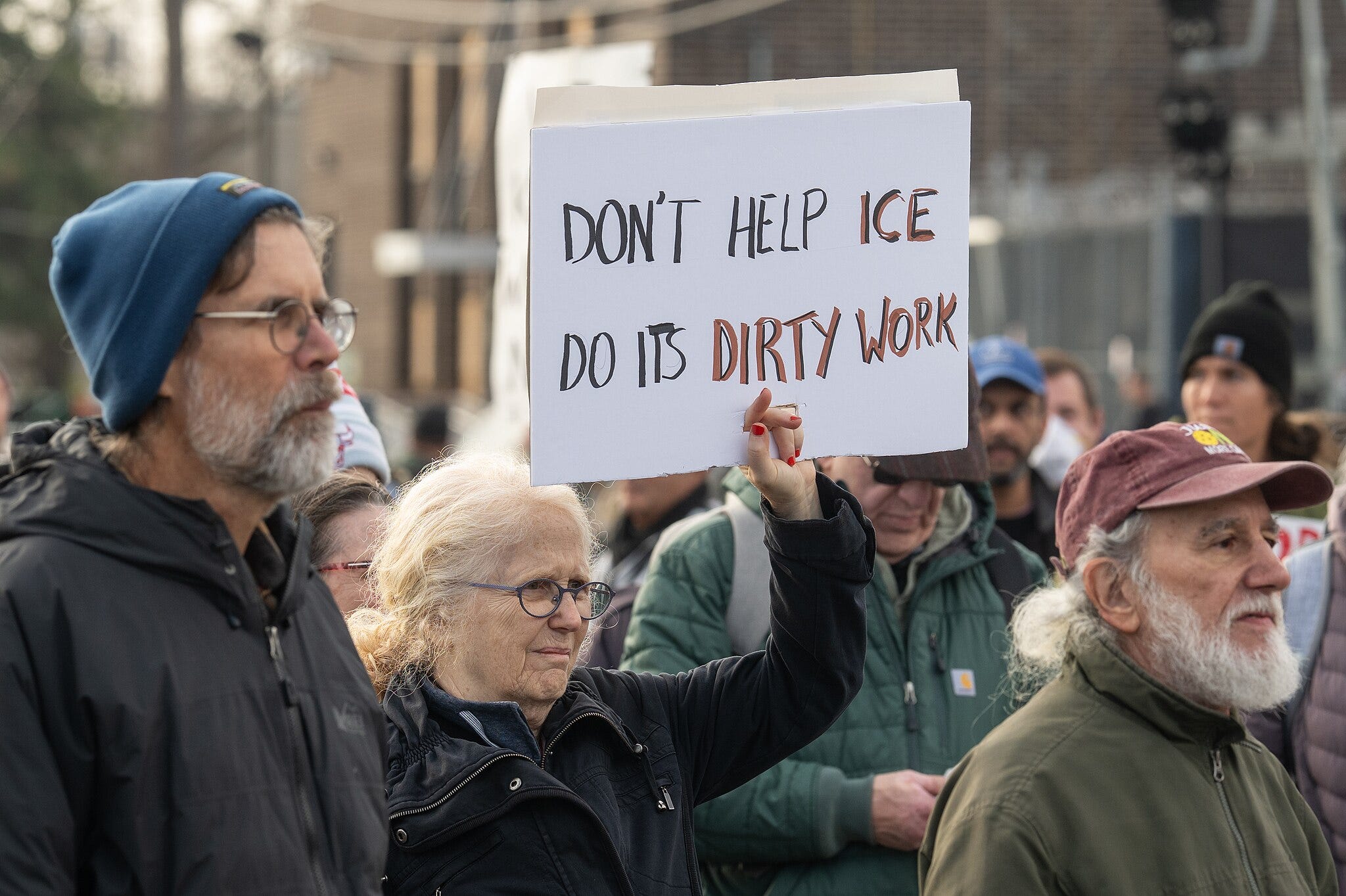
Defending Cities from Federal Militarization
Following the lead of Gov Healey’s executive order on federal immigration enforcement in Massachusetts, mayors from Boston, Cambridge, Newton, and Somerville along with Worcester’s city manager issued executive orders1 to protect their residents during ICE operations. In addition, Newton joined 43 other cities from across the US in filing an amicus brief supporting Minnesota’s Supreme Court lawsuit to end the surge of hypermilitarized federal immigration enforcement targeting communities of color in Democratic-led cities and states.
Analysis of Newton’s Executive Order
Newton’s amicus brief and executive order are important first steps, but there is more our city leaders can do to protect all Newton residents, workers and visitors. Members of Sawa’s advocacy work group compared Newton’s executive order to Boston’s governing local police and other city departments. As you read the analysis below, we encourage you to reflect on the following questions:
Which of these policies do you feel are important to bring to Newton?
Did our analysis miss something important to you?
Are you aware of other Executive Orders or municipal ordinances that offer a strong model?
We encourage you to reach out to the City Council (citycouncil@newtonma.gov) and Mayor Laredo (mlaredo@newtonma.gov) with the priorities you want to see adopted in Newton.
Meeting the Moment: Why Strong Local Action is Needed
The Trump administration has been crystal clear in using “national security” to weaponize anti-terrorism laws to target any opposition to its “authoritarian practices”. By labeling immigrants – regardless of legal status or criminal history, or for their political views – as “criminals” and their allies as “terrorists”, the Trump administration is attempting to create the moral justification for the staggering rate of killings and violence and erosion of civil liberties. Directly quoting the National Security Presidential Memorandum 7 (NSPM-7), the order defines racial, gender, and religious diversity as a national security threat: “anti-Americanism, anti-capitalism, and anti-Christianity; support for the overthrow of the United States Government; extremism on migration, race, and gender; and hostility towards those who hold traditional American views on family, religion, and morality.” The Supreme Court recently upheld racial profiling defending the militarized federal immigration enforcement actions targeting black and brown residents. A month after the ruling, federal agents terrorized predominantly Black neighborhoods in Chicago.
An Examination of the Executive Orders’ Rationale
Each executive order we analyzed starts with a section (“where as”) listing the moral, legal and factual rationale for issuing an executive order on the city’s response to federal immigration enforcement. Does the executive order name the threat of authoritarianism or the deliberate targeting of communities the Trump administration has marked as undesirable (immigrants, people of color, LGBTQ people or political opponents)?
Summary of selected Newton’s rationale statements (paraphrased):
Newton is a “welcoming city” (see Article VII), which sets some limits on information sharing between the NPD and ICE and when to detain immigrants on behalf of ICE
Newton believes in democracy and rule of law
Our police department upholds the law
The goal is to maintain trust between city government and the residents
Summary of selected Boston’s rationale statements (paraphrased):
Counters Trump’s false narrative of high crime rates to justify federal action (data shows it’s one of the safest cities for many many years)
Rejects the “good immigrant” vs. “bad immigrant” narrative, reaffirming basic rights of everyone regardless of being a victim or offender
Defends local and state rights from federal interference
Federal law enforcement has no immunity from local and state laws
ICE is causing a crisis across the country
Naming “tyranny” and Boston’s history of fighting it
Our Response: The Executive Orders’ Actions
The executive orders name specific actions city agencies will take to respond to federal action.
Role of local police during a protest action:
Newton: follow “established protocols and longstanding practices” to protect protestors, including in the case of injury
Boston: local police and emergency services will follow de-escalation procedures to protect protestors, and provide emergency services if there is injury, but cannot interfere with federal immigration enforcement
Transparency in federal action:
Newton: not addressed
Boston: City will release video footage of immigration enforcement actions captured on police body cams or on city surveillance cameras, with exceptions for video footage that needs to be withheld during an active criminal investigation
Criminal conduct by federal officials:
Newton: not addressed
Boston: Notification to residents that the police department will investigate any violence, property damage or criminal conduct by federal agents.
Public communication on role of police:
Newton: not addressed
Boston: City agencies shall issue city wide guidance to call 911 if ICE trespasses on property without a warrant (doesn’t distinguish between a judicial and administrative warrant). The police department shall utilize de-escalation in their response.
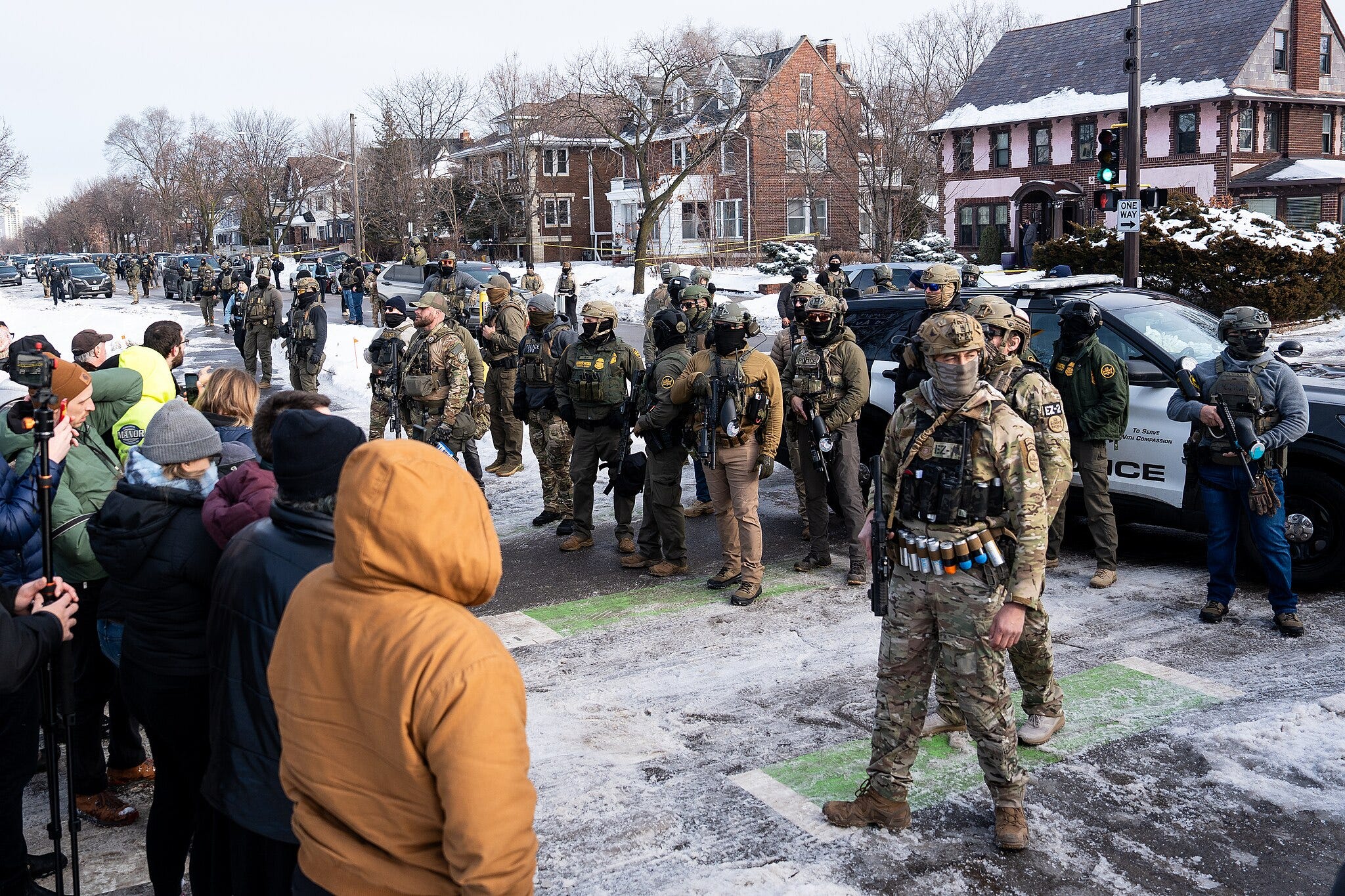
Prohibit use of city owned property (public or non-public access) for ICE activities (Boston and Newton both address this)
Access to municipal buildings (schools, libraries and community centers)
Newton: These buildings “are to be accessed for [their intended] services”
Boston: Names specific agencies responsible to inventory city-owned/operated spaces and post signs restricting access to users authorized by the city
Role of municipal employees in responding to federal agents accessing municipal buildings:
Newton: not addressed
Boston: Issue guidance to instruct municipal staff to direct federal agents to city’s legal department; signage indicating non-public spaces; and prohibit agents from entering non-public spaces without a judicial warrant
Student protections in schools and school events:
Newton: not addressed
Boston: References student safety procedures including limits on public access to school property during school days
Signs for private spaces:
Newton: not addressed
Boston: City will create a template for signs for property owners and leaseholders indicating private spaces.
Legal action:
Newton: not addressed
Boston: City will use legal avenues to respond to federal action impeding city actions or “jeopardizes health, safety and welfare of City residents”
Additionally, Boston has an existing regulation that restricts the use of facial surveillance technology within the city that Newton could adopt as well. The Trump administration is using the NSPM-7 order to expand surveillance contracts to collect and aggregate data on immigrants and citizens.
We encourage the mayor and city council to use the executive order as a springboard for a robust response in Newton.
Further Reading
Calls mount for release of Palestinian protester held by ICE for nearly a year
WGBH: Some local police, sheriff and DA offices are communicating often with ICE, records show
The Ferocity of Responses to Tim Walz’s Anne Frank/ICE Comments Are Revealing
ICE to spend $38.3 billion on detention centers across US, document shows
ACLU Massachusetts: AI-Powered Surveillance Is Turning the United States into a Digital Police State. Now is the Time to Stop It.
Content disclaimers.
Signed articles contain the opinions of their authors, and do not necessarily represent consensus positions of Sawa. Some authors may use partial bylines or pseudonyms because of security concerns.
Links to outside websites or other resources refer to content beyond the control of Sawa, and may be altered or taken down after publication. We apologize for any inconvenience. We are not responsible for any errors in outside-linked articles.
Image Credits
“Don’t Help ICE” protesters, paul goyette, CC BY 4.0 via Wikimedia Commons
ICE Agents in Minneapolis, Chad Davis, [1], CC BY 4.0 via Wikimedia Commons
Unlike legislation, which sets citywide policy and must go through the legislative process, an executive order is limited to the operations of administrative agencies under the direction of a governor or mayor and does not require further authorization.
“Sawa” Means Together…
Driven by a vision of collective liberation, our diverse peace alliance advocates for equality and justice for Palestinians, Arabs, Muslims, and inclusion for all.